MAYAN MEDICINE

MAYAN MEDICINE

The Mayan civilisation formed thousands of years ago. The thick jungle in which lay the Mayan cities, prevented strangers from entering their territories. Therefore, when their settlements were found, the whole scientific world was struck with wonder seeing the culture that the Mayan thesaurus revealed.

The scientists describe the Mayan civilization as a highly developed one, with a varied culture; on top of everything, one that disappeared without leaving a single grave behind. The graves they found there belong to the Indians who had nothing in common with the Mayans; they had come across the Mayan treasure accidentally, used it and died there.

The archaeologists’ diggings revealed flawlessly carved sculptures; they found castles built with a technique unmatched even in our days, as well as a great variety of utensils, the manufacturing technique of which is merely being developed at present and guessed for the most part, too, because they are made out of certain alloys that nobody knows how the Mayans obtained. They remain an enigma as an enigma remains the entire Mayan civilisation.

The Mayan civilisation set an example in architecture, too. It reached a level unattained to this day. It was proven that the Mayans had discovered the figure 0 before all people, because there were relics in the Mayan vestiges that started degrading as soon as they had been discovered, which raises the following question: couldn’t the Mayans have programmed the destruction by calculating their discovery?

The Mayan Empire was made up of independent Countries-Cities. Each had its own leadership and economic system as well. Even if they were independent administrative structures, there was a centralized leadership, which shows a very high level of civilisation and discipline.

The Mayans also had very well built roads inside their prayer centres and between cities, inside their territory.

The Mayans had an elevated culture, the height of which hasn’t been attained to this day. They had and they knew how to use properly the astronomical observatory and the records that prove it are only being discovered at present. The Mayan leaders were kings and high priests at the same time. They issued codices of behaviour and bearing that had to be observed in all the cities and all over the Mayan territory.

The discoveries have shown that the Mayans also had very accurate computing methods. For instance, 149 lunar cycles totalled 4,400 days or astrologists today state that the cycle is 4,400.0575 days. The question that arises is the following: Who is wrong? Another example is that a planet completes a revolutionary cycle in 584 days and the modern scientists say that it is done in 583.82 days.

Many things can be said about the Mayan civilization, but the most important one is that, according to their calculations, the human being appeared 5,041.738 years B.C.

The Mayans performed perfect surgeries or trepanations; the incisions were done with high precision. Mayans even practiced blood taking at a time when perfusion hadn’t been yet discovered, as they presume. They performed transplants with various instruments and they used mouth protections as well as appropriate clothing at an equally advanced level as they use in any respectable medicine centre of our days. They inserted their bare hands into the human body and head; they managed to do it without utensils, which makes us think that they used a technique acquired as a result of their evolution, the technique of entering the energy field of the aided person.

They didn’t grow old because they used the energy field and always consumed herbal mixtures. They used cryogenics, as method of preserving a limb, which makes us think that Mayans used to keep a patient cryogenized until his or her tissues were regenerated, a procedure normal for our time, but not for that age, though. Nowadays, this technique is still under study and at an experimental level and therefore the Mayans’ achievements are all the more amazing in all the range of science, and that is because the Mayans made remarkable discoveries in every field.

Physically, the Mayans developed until a certain age. They mastered the ageing process and they could keep it under control. In the traditional and general medicine, the Mayans had accomplishments that will never be attained by the modern world.

The source of all the above-mentioned things can be found in the Mayan written records, which are drawn in a certain way, namely written and painted on slabs and walls. All their paintings were recorded on cameras and photographed and they are the source of correct and accurate conclusions.

At this point it is interesting to mention that, on the moment people had found everything there was to discover, everything started degrading; the writings were almost gone and of the constructions there are only remnants of the Mayan civilisation.

The Mayans strove to attain immortality.

Apparently, they attained it, because there is no grave, which means that they knew what they were doing and that they succeeded to discover invisibility eventually.

The Mayans left a huge thesaurus of knowledge that is good to follow and that may help us attain a level of civilisation at least close to theirs.  In the traditional medicine, by the drawings and the herbs found on their territory, the Mayans helped a lot and they brought their gift to the human beings today.

Affections

Affections

The human being is healthy only during the intrauterine life. Upon the baby’s first breath, the cells of the body start to die. The human body has the ability to purify itself of the residue left by the death of the cells until the age of 17. After this age the human being loses this ability.

The residues accumulated in the body deposit on the internal organs as fats or as calcifications. When the internal organs are full of these fatty residues, the body starts to gain pounds and in time obesity occurs.

For people who maintain a relatively normal weight during their lifetime, the residues are deposited as calcifications causing the healthy tissue to become fibrous and producing the sclerosis of the internal organs and of the entire body.

The diseases are a result of our life style and of the stress this puts on the human body every day. Under this pressure, the organ most affected by the residue deposits will collapse by falling ill. Thus, the direct connection between the brain and the sick organ is broken. The sick organ starts working chaotically, as its activity is no longer coordinated by the brain properly.

Considering the fact that the health of an organ depends on the health and normal activity of another, the entire human body becomes ill after one organ falls ill. This chain reaction is started when the first organ gets sick and at first will produce metabolic imbalances. In time, the other organs will get ill, as the connection between the brain and the organs is interrupted.

The traditional medicine that I practice balances the body’s activities and it’s functions so that the process of purification is restored and the residues accumulated in the body can be eliminated. At the same time, the connection between the brain and organs is restored and they will able to resume their functions at optimal levels. When the treatment is finished the cellular structure of the internal organs is completely renewed.

The results of this treatment are influenced on the gravity and stage of the body’s affections and imbalances.

Our Location


Our Environment

The Town Of Gabrovo

Etar Architectural and Ethnographic Museum Complex.

Etar Architectural and Ethnographic Museum Complex.

The Etar museum complex near Gabrovo.

Renovated village with water-driven machines and craft shops. 

The town of Gabrovo is situated at the northern foot of the central part of the Balkan mountains, on the Yantra river, in the immediate proximity of the geographical centre of Bulgaria, approximately 220 km from the capital Sofia and 300 km from the town of Varna. It is an attractive tourist centre, famous for its mountain clear air, historical and ethnographical sights and cultural monuments. Gabrovo and the area around it is considered one of the most ecological regions in Bulgaria. It is also popular as the Capital of Humour and Satire.

Gabrovo originated during the 14th century. According to a legend, the settlement was established by Racho Kovacha (Racho the Blacksmith) However, archaeological remains in the city centre proved that the settlement existed as early as the 12th century.

During the National Revival period, Gabrovo was an important centre of crafts and trade. It had connections all over Europe and the Middle East. Its inhabitants embraced the advanced ideas of the period and the town became the cradle of Bulgarian education and culture. In 1835 the first Bulgarian non-clerical high school was opened in Gabrovo by Vassil Aprilov, who donated the money for the building.

5033394

After the Liberation of Bulgaria in 1878 the textile, leather and machine-building industries were fast-growing in Gabrovo. Education was further developed too. The famous Aprilov School became well-established and one of the first technical schools in Bulgaria was opened. It was named after the Gabrovo patriot Dr. Nikola Vassiliadi, who donated the money for the building.

Gabrovo cherishes the tradition to be the educational, cultural and spiritual centre of the region. It is famous for the Festival of Humour and Satire, held every year in May and opened by a glamorous carnival along the central streets of the town. A major cultural event is the Balkan Youth Festival, held every year in August. It is a forum that attracts youth folklore, musical and performing groups from all countries of the Balkan region.

The main means of transport available in town are bus and trolleybus services. Taxis are also widely available and convenient means of transport. 

Gabrovo has a theatre hall, a couple of cinema halls, as well as concert halls housed in the House of Culture. A lot of theatrical, musical and folklore professional groups, puppet show, pantomime theatre, Gabrovo Chamber Orchestra, «Gabrovo» – Swing Dixy Band and a lot of others contribute to the cultural life in Gabrovo. 

Enhancing resident independence

Encouraging Independence in Seniors – Maintaining Quality of Life

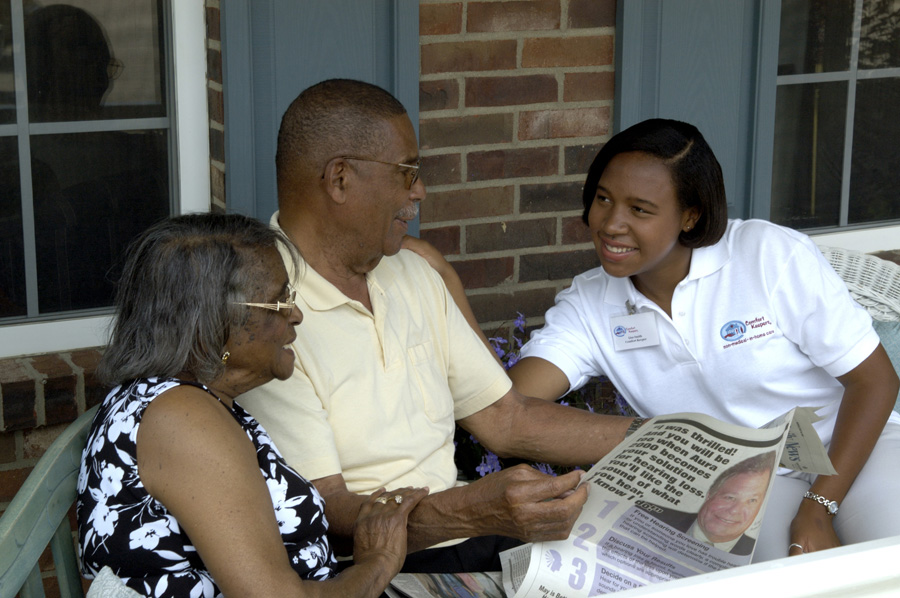
As a caregiver, it is important to encourage independence in seniors and to provide the opportunity for them to maintain a better quality of life for themselves. By participating in activities with your senior loved one, you show that you care, and you help improve their overall health. In fact, research indicates that keeping seniors physically, mentally, socially and emotionally engaged can help them retain better cognitive function, stay healthier and live independently longer.

As the seniors in our lives grow older, daily interaction is vital to their healthMaintaining Quality of Lifeand happiness. However, when caring for them, it is easy to get into the habit of doing things “for” them rather than “with” them. Let’s face it — it can be more efficient to do everything yourself. Seniors are seasoned pros at doing things for themselves, but due to aging bodies or underlying health issues, aspects of everyday living sometimes become a bit more physically and mentally challenging. Seniors may need your help, but doing everything for them is not a good solution, nor does it cultivate a better quality of life. Instead, we recommend a technique called interactive caregiving.

Interactive caregiving is a method of caring for seniors that promotes physical, mental, social and emotional well-being. When put into action, this philosophy focuses on the person as a whole, helps seniors live the highest possible quality of life by keeping them happy and engaged, and fosters healthy independent living within their own homes.

The true art of caregiving for the elderly extends beyond task-oriented responsibilities and includes engaging in activities that help maintain a healthy spirit and body. Talk to the senior in your life to help determine what his interests are, then form a plan to do those things together. When planning your activities, keep the elements of interactive caregiving in mind.

  • Physical activity, which should always be approved by the senior’s physician, helps reduce the severity of illness, increases strength and reduces the risk of falling. Dancing can reduce high blood pressure, strengthen bones and lower the risk of heart disease. Dancing with friends also provides a social outlet that stimulates the mind and can reduce the effects of dementia. Activities such as gardening and house keeping inspire positive self-esteem and improve quality of life.
  • Socializing with family and friends, as well as attending parties or other events, makes seniors feel less isolated and promotes good memory retention. The effects of being socially active are just as beneficial as physical activity in terms of self-esteem and higher quality of life, which is important to note for seniors who are unable to exercise.
  • Mental stimulation, such as crossword puzzles or other brain games, keeps minds active and facilitates healthy mental and emotional function. Mental well-being fosters a sharp mind and a positive outlook on life.
  • Emotional well-being depends on several factors, such as feeling connected to family and friends, being involved in the community or taking on a hobby. Emotional stability helps seniors feel happy and optimistic, which can keep depression at bay.

Encourage seniors to help with tasks they are able to perform, such as folding laundry and writing a grocery list. Play a game or work on a puzzle, read the paper over a morning cup of coffee or take a walk together after lunch. Shopping together provides another form of exercise and the chance to do something together. Planting flowers and other gardening activities are not only fun, they also provide a sense of accomplishment when you both step back to enjoy the fruits of your labor.

There are many more activities that can improve the quality of life for seniors. Use your imaginations and work together to plan fun things that will transform even the most mundane daily activities into special memories that last a lifetime.

Source: Comfort Keepers – Senior Independent Living